What Are the Key Benefits of EMR Software for Hospitals?

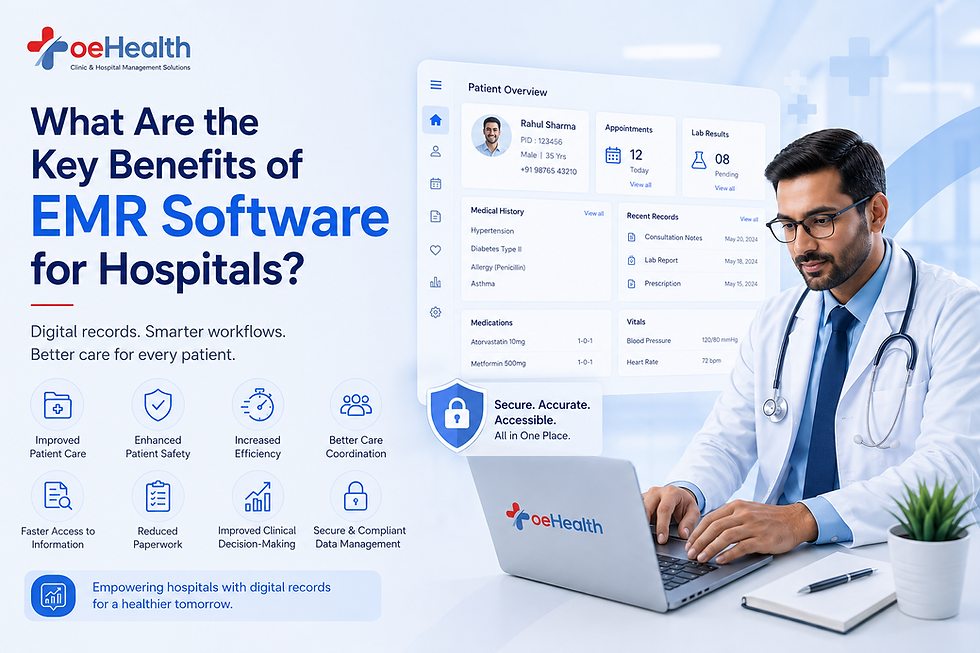
Hospitals manage vast amounts of patient information every day, from medical histories and treatment plans to prescriptions and diagnostic reports. Relying on paper-based records or disconnected systems can lead to inefficiencies, delays, and potential errors. This is where EMR software for hospital environments plays a critical role.
Modern Electronic Medical Records in Healthcare help healthcare providers store, access, and manage patient data digitally, improving both clinical and administrative operations. In this article, you'll learn the key benefits of EMR software, how it supports better patient care, and why solutions like oeHealth are helping hospitals accelerate digital transformation.
The key benefits of EMR software for hospital operations include faster access to patient records, improved clinical decision-making, reduced paperwork, enhanced patient safety, streamlined workflows, and better care coordination. Modern EMR systems in healthcare also improve efficiency, data accuracy, and communication across departments.
What Is EMR Software?
Electronic Medical Record (EMR) software is a digital system that stores patient health information, including diagnoses, treatment histories, medications, laboratory results, and physician notes.
Unlike traditional paper records, EMRs allow authorized healthcare professionals to access patient data instantly and securely.
What Are the Main Benefits of EMR Software for Hospitals?
1. Improved Patient Care
Doctors and healthcare teams can access complete patient records in real time, helping them make informed treatment decisions and reduce delays in care.
2. Enhanced Patient Safety
Digital records reduce documentation errors, duplicate testing, and medication conflicts by providing accurate and updated patient information.
3. Increased Operational Efficiency
EMR software automates routine tasks such as documentation, record retrieval, and information sharing, allowing staff to focus more on patient care.
4. Better Care Coordination
Specialists, physicians, nurses, and laboratory teams can collaborate more effectively when patient information is available through a centralized system.
5. Faster Access to Information
Whether during emergencies or routine consultations, healthcare professionals can quickly retrieve critical patient data.
EMR Software vs Traditional Paper Records
Feature | Paper Records | EMR Software |
Accessibility | Limited | Instant Access |
Accuracy | Prone to Errors | Improved Accuracy |
Data Sharing | Manual Process | Real-Time Sharing |
Storage | Physical Space Required | Digital Storage |
Security | Vulnerable to Loss | Controlled Access |
Expert Insights: Best Practices for EMR Success
Hospitals achieve the greatest value when EMR implementation focuses on both technology and user adoption.
Best Practices
Select a scalable healthcare platform.
Train staff thoroughly before deployment.
Integrate EMRs with hospital management systems.
Regularly monitor data quality and security.
Common Mistakes
Inadequate staff training.
Poor workflow planning.
Choosing systems without integration capabilities.
Delaying data migration strategies.
How Hospitals Across India Benefit
Hospitals in Mumbai, Delhi, Bengaluru, Hyderabad, Chennai, Ahmedabad, and other growing healthcare markets are investing in Electronic Medical Records in Healthcare to improve patient outcomes and operational efficiency.
Platforms like oeHealth help hospitals modernize record management while supporting regulatory compliance and digital healthcare initiatives.
Related Resources
Related Blog: A Smarter Path to Mastering English with Personalised Support
Service Page: oeHealth Hospital Management and EMR Solutions
Resource Guide: Digital Healthcare Transformation Guide
Key Takeaways
EMR software improves patient care and safety.
Digital records reduce paperwork and administrative workload.
Real-time data access supports faster clinical decisions.
Better collaboration improves care coordination.
EMRs enhance accuracy and operational efficiency.
Hospitals across India are accelerating EMR adoption.
oeHealth provides integrated healthcare technology solutions.
Conclusion
Implementing EMR software for hospital operations is no longer just a technology upgrade—it's a strategic investment in better healthcare delivery. By improving accessibility, efficiency, and patient safety, EMR systems in healthcare help hospitals deliver higher-quality care while streamlining daily operations. Solutions like oeHealth support healthcare providers in building a more connected and efficient future.
FAQs
What is EMR software in healthcare?
EMR software is a digital platform that stores and manages patient medical records, helping healthcare providers access accurate information quickly and securely.
How does EMR software improve patient care?
EMRs provide real-time access to patient histories, medications, test results, and treatment plans, helping clinicians make faster and more informed decisions.
What is the difference between EMR and paper records?
EMRs offer digital access, improved accuracy, secure storage, and easier information sharing, while paper records are manual, slower to access, and more vulnerable to loss.
Are EMR systems suitable for small hospitals?
Yes. Modern EMR solutions are scalable and can support small hospitals, specialty clinics, and large healthcare networks based on their needs.
How does oeHealth support hospitals with EMR solutions?
oeHealth provides integrated healthcare technology solutions that help hospitals manage patient records, improve workflow efficiency, enhance care coordination, and support digital transformation initiatives.


Comments